Surfactants (Surface Active Agents) are the workhorses of any detergent, responsible for lifting dirt and grease from fabrics. Their effectiveness is heavily influenced by their molecular structure, particularly the length of their hydrophobic (water-repelling) tail.
Hydrophobic Tail and Cleaning Efficiency
A surfactant molecule typically has a hydrophilic (water-loving) head and a hydrophobic tail. The hydrophobic tail is attracted to oily dirt, while the hydrophilic head is attracted to water. This dual nature allows surfactants to encapsulate dirt particles and suspend them in water, preventing them from redepositing on fabrics.
"The unseen architecture of molecules dictates the visible cleanliness of our clothes."
Optimal Chain Length (C12–C16)
Research indicates that for laundry applications, surfactant tails with 12 to 16 carbon atoms (C12–C16) strike the best balance for efficiency and detergency. Shorter chains (e.g., C8–C10) may be too soluble and less effective at penetrating greasy stains, while longer chains (e.g., C18+) can become less soluble and prone to solidifying at lower temperatures, reducing their ability to form micelles and lift dirt effectively.
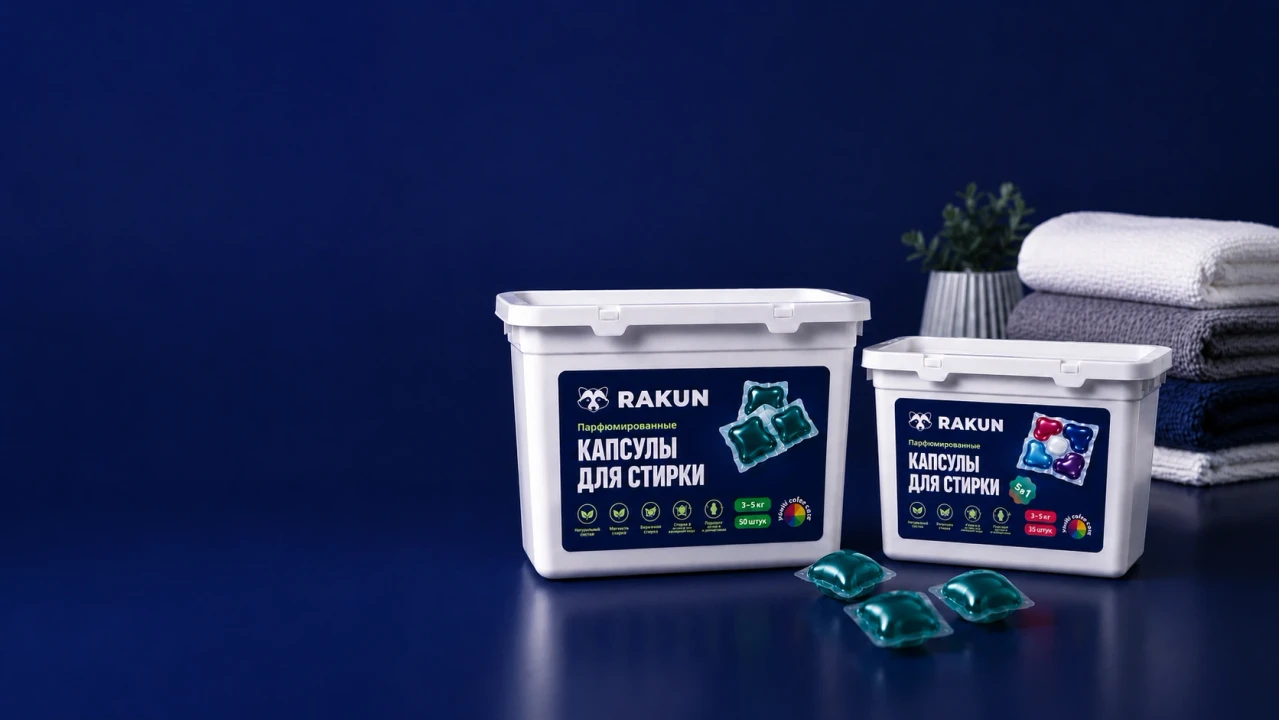
RAKUN's anionic–nonionic blend is meticulously crafted to include surfactants with optimal chain lengths, ensuring maximum cleaning power across various fabric types and water temperatures. This precision in formulation is what sets RAKUN apart, allowing for powerful cleaning with a reduced environmental footprint.